




The demand for outdoor weddings, corporate team building, and brand exhibitions has been rising steadily in recent years. The event venue industry is enjoying stable growth opportunities. If you want to enter the venue service business, mastering standardized operations and setup methods is the key to running a successful event venue business.
This article will walk you through the complete process of starting an event venue business. It covers everything from market positioning and site selection to operations and promotion. We hope this guide helps you launch your project quickly and manage your event venue business steadily.
Why Start an Event Venue Business Today?
The demand for distinctive event venues continues to grow. Many couples choose gardens, lakeside locations, domes, and other outdoor spaces for weddings. Businesses are also looking for venues that can create a stronger experience for conferences, product launches, and brand events. Private parties and social gatherings often require spaces that feel different from traditional banquet halls.
Flexible event venues can serve a wide range of customers throughout the year. A single venue may host weddings one week and corporate events the next. Structures such as event domes can be adapted to different event sizes, layouts, and seasons. This allows venue operators to respond to changing market needs more easily.
From a business perspective, flexible venues can create multiple revenue opportunities without the need for large permanent buildings. Their ability to support different event types helps improve venue utilization and expand potential income sources. For entrepreneurs entering the event industry, this makes the event venue business an attractive option with strong long-term potential.

Breaking Down the Steps to Build Your Business
To start your event venue business smoothly, you need to take each step in order. Below, we will break down the detailed steps of how to start an event venue business.
Step 1: Define Your Venue Concept and Target Market
The first step in starting an event venue business is to define your venue's operational positioning. You need to decide on your main venue type. For example, do you want to focus on high-end wedding venues, simple business event spaces, or multi-functional outdoor party venues? Different positioning attracts completely different clients.
Wedding venues mainly serve couples and wedding planners. Business venues cater to corporate clients. Multi-functional venues can cover all types of events. You need to consider your budget and local market demand to choose the right direction. Don’t blindly follow popular trends. This is the most important step in a business plan for an event venue.
Step 2: Research the Market and Local Demand
Once you have defined your positioning, you have to conduct in-depth local market research to understand the competitive landscape. Here are a few useful tips. You are expected to visit nearby venues in person. During your visits, record the capacity, pricing, style, and main services of your competitors.
Also, you can open Google on your phone to search for local venue businesses. If possible, pose as a customer to tour one or two venues and experience their actual service process. While researching, focus on market gaps. For example, many areas lack visually appealing outdoor venues, distinctive dome structures, or flexible temporary event spaces. Identifying these gaps will help your event venue business stand out quickly.
Step 3: Choose the Right Business Model
Currently, the event venue business mainly operates under two models. You can choose according to your needs. The first is the pure venue rental model, where you only provide space and basic facilities. This model is simple to operate and has low labor costs, making it ideal for startups.
The second is the full-service model. It includes venue decoration, event planning, catering coordination, and other value-added services. This model has higher revenue per order but also requires higher costs. The choice should be given to the model that fits your resources and team capabilities.

Step 4: Create a Practical Business Plan
A practical business plan helps venue operators lower operational risks. The plan must clearly outline your main services, pricing, and revenue sources. In addition, the plan has to calculate startup costs, including venue construction, equipment purchases, and labor.
You also have to design an integrated online and offline promotion strategy, along with a sales conversion approach. Determining your break-even timeline and annual profit forecast is equally essential. Such a clear plan prevents your event venue business from unnecessary losses due to blind investment.
Step 5: Find and Secure the Right Location
The location of your venue has a significant impact on both the customer flow and the overall experience of your event venue business. Sites with convenient transportation, plenty of parking, and nearby hotels or guesthouses deserve priority. What's more, you should also look into local zoning laws and noise control rules before making a choice.
It is equally important to assess the venue's atmosphere and how well it fits the surrounding community. At the same time, consider balancing indoor permanent spaces with flexible outdoor areas. Using movable structures outdoors can help you easily adapt to different event sizes.
Step 6: Handle Legal Requirements and Permits
Compliance is the foundation for the long-term operation of your event venue business. You need to complete company registration in advance and obtain the necessary business licenses and event venue operation permits. Always follow local industry regulations strictly.
In addition, you must purchase comprehensive venue insurance. This can effectively help you avoid risks and financial losses caused by unexpected incidents. Proper compliance procedures and risk protection will minimize hidden dangers for your event venue business.
Step 7: Design and Build Your Venue Space
Site design and construction are key to enhancing the competitiveness of your venue. A well-thought-out layout can greatly improve the guest experience. You are supposed to plan the guest flow, seating areas, stage placement, and back-of-house service zones in advance.
The overall layout should be tidy and organized, and the circulation should remain smooth. Basic facilities must also be well prepared. You should use quality lighting and sound systems for the venue. Amenities such as restrooms, power supply, and weather protection should also be properly arranged.
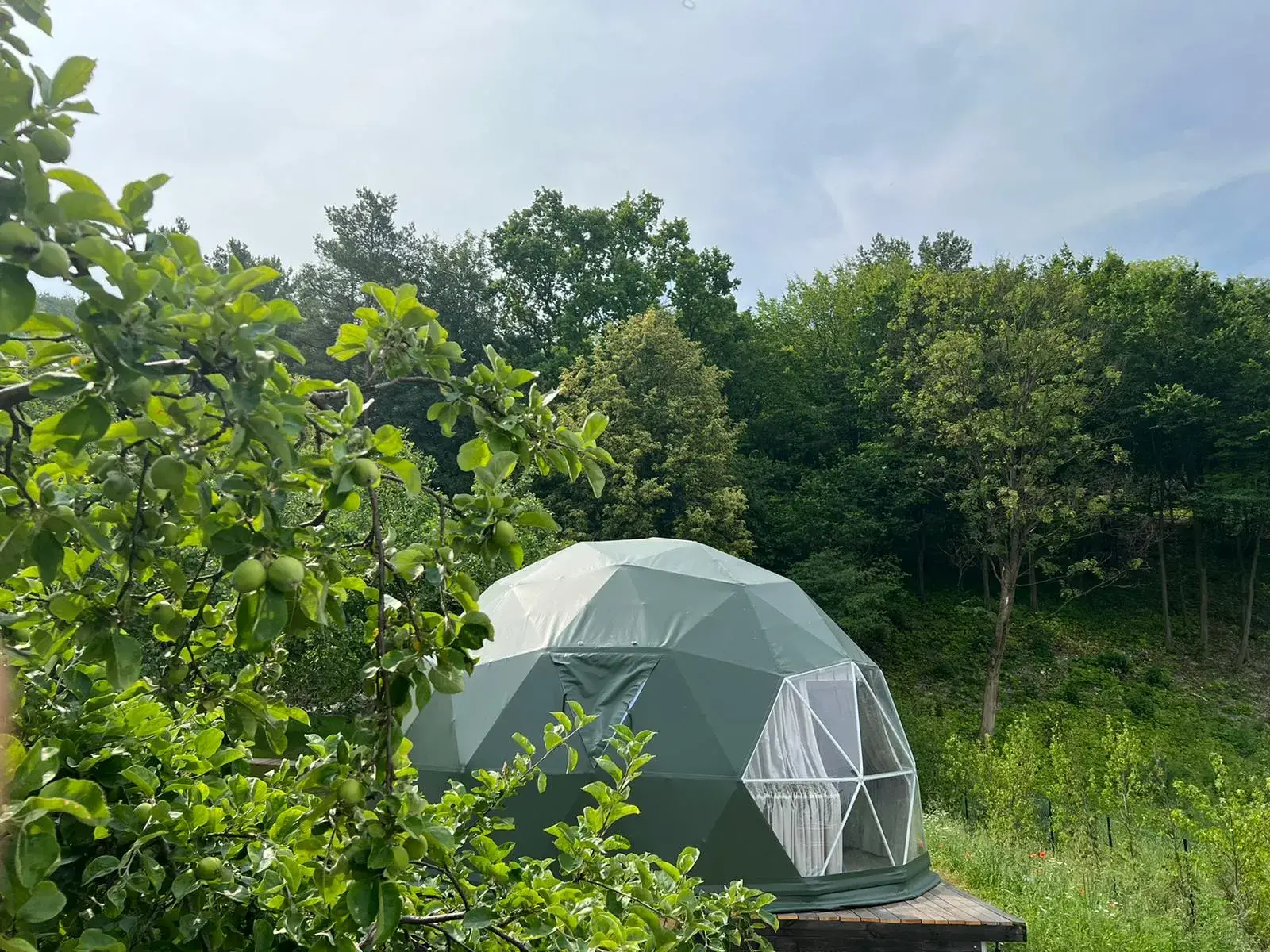
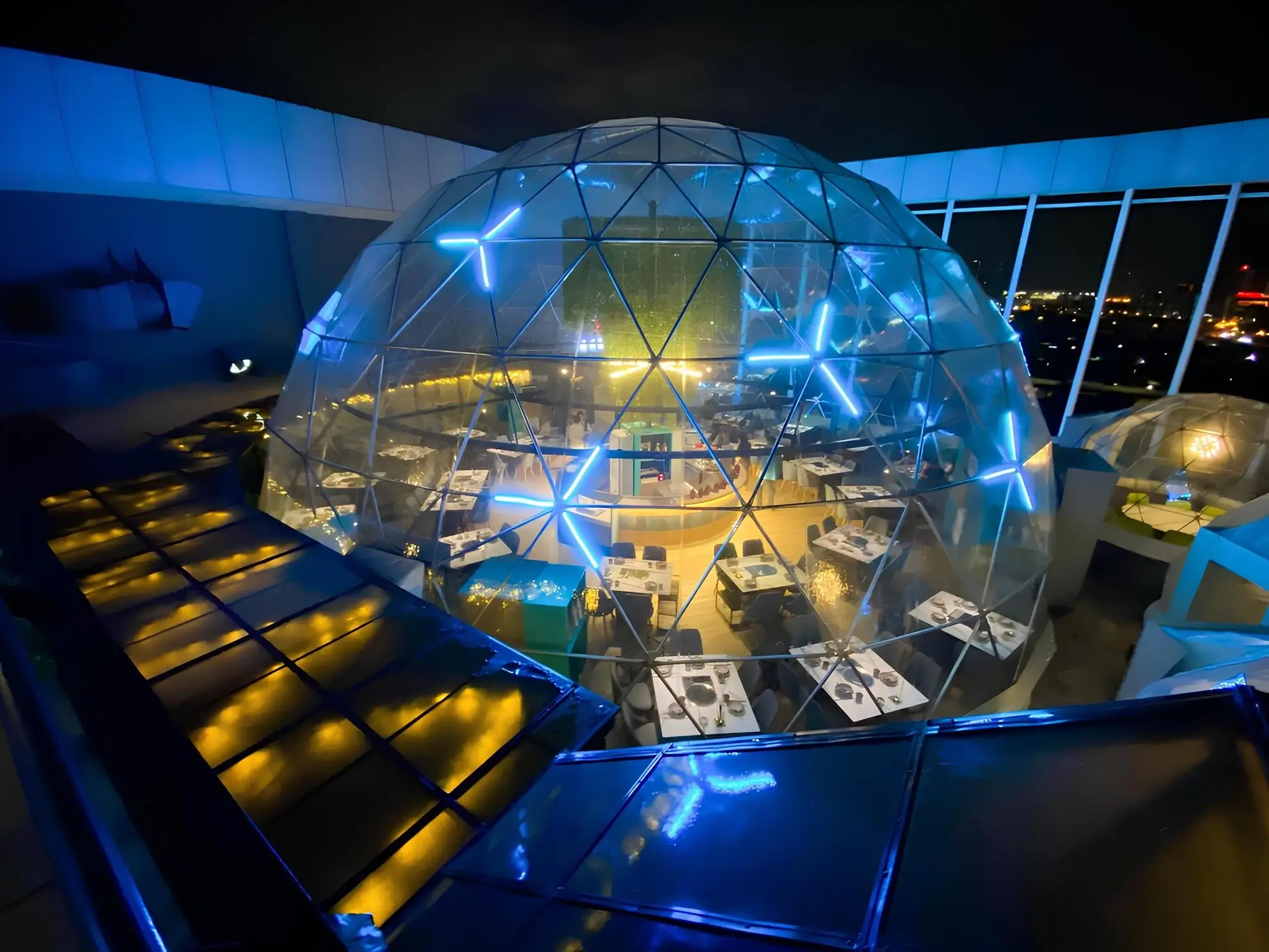
If you want a venue that can handle different weather conditions and event sizes, an event dome is well worth considering. The event dome uses a prefabricated design. This design makes its setup and takedown very simple and fast. This greatly saves labor and time costs.

The event dome has no poles inside. Therefore, the space inside an event dome is very open and spacious. You can freely arrange stages, tables, chairs, lighting, and sound equipment. Whether it is a wedding, an exhibition, or a branded event, this outdoor event space is highly adaptable to many scenarios.
The frame of the event dome is made of Q235 steel pipe or high-strength aluminum alloy, and the cover is waterproof and wind-resistant PVC or PVDF. The combination gives the event dome good durability and weather resistance. Moreover, event tent types are also very diverse. You can choose according to your needs. Whether it is a small gathering or a large event, the event dome is an excellent choice.
Step 8: Set Pricing and Service Packages
Reasonable pricing can make your event venue business more competitive in the market. You may refer to the pricing standards of local competitors. However, this should not be your only criterion. You also need to adjust your prices based on factors such as your venue size and the supporting services you offer.
It is advisable to offer both a basic package and a premium upgrade package. The basic package covers the venue, essential utilities, and cleaning services to meet the needs of budget-conscious clients. The upgrade package may include decoration, equipment rental, and other value-added services. Such a pricing structure helps increase the average transaction value per customer.
Step 9: Build Vendor and Partner Networks
For an event venue business, building a stable network of partner resources is highly beneficial. You can proactively reach out to local catering teams, photography studios, event planning companies, and other upstream and downstream vendors.
Establishing long-term partnerships with these vendors also allows you to compile a list of recommended suppliers. This approach not only provides clients with more complete services but also helps you gain more customers through mutual referrals. Two-way customer flow helps an event venue business steadily expand its client base and increase revenue.

Step 10: Market Your Event Venue
High-quality venues require precise promotion to attract more customers. You'd better set up a dedicated official website for this. All on-site photos of the venue, event cases, and customer reviews can be uploaded to this website. Major social media platforms can also be utilized. You can continuously post venue effects and real customer feedback on these platforms to attract potential customers' attention.
Additionally, completing store registration on local lifestyle platforms and map tools is also a good way. This is very convenient for customers to search and query, and can continuously improve the exposure of the venue. These methods can all provide stable traffic for your event venue business.
Step 11: Prepare for Daily Operations
Standardized daily operations can improve customer repurchase rates and word-of-mouth communication. Establishing standardized daily operations requires the development of standardized processes. This covers the whole process, services such as customer booking and docking, site layout, cleaning, and so on.
Furthermore, arranging dedicated personnel to be responsible for on-site management, customer communication, and handling unexpected issues can ensure the smooth progress of the event. In addition to these methods, you ought to also use simple office tools to record order information, booking times, and customer needs. This will enhance the operational efficiency of the event venue business.
Conclusion
From initial planning to final operation, each step of starting a venue business requires patience and careful planning. However, as long as you follow the 11 steps above step by step, you will own a popular venue. If you are struggling with choosing the right structures for your venue, please contact Shelter Dome.
Shelter Dome provides custom dome tent solutions for venue operators looking to create unique event spaces. Our team supports projects from design and manufacturing to installation and after-sales service. With experience across a wide range of venue applications, we help businesses develop practical and attractive spaces that meet different event needs.
