



Living in a tent might sound unconventional, but for many, it offers a unique opportunity to reconnect with nature and embrace a minimalist lifestyle. Whether you're exploring a nomadic way of life, going off-grid, or simply seeking a more adventurous living situation, modern livable tents have evolved to offer both comfort and durability.
In this guide, we’ll look at whether living in a tent is a practical and necessary choice, and what to keep in mind when picking the best tent to live in. We’ll also explore the top 6 tents you can live in, providing you with the ideal blend of practicality and comfort for living outdoors year-round.
Can You Live in a Tent & Why Live in a Tent?
Yes, surely you can. As long as you follow local rules, living in a tent is totally possible. Whether it’s for a temporary escape, a minimalist lifestyle, or the freedom to explore the world while maintaining comfort, living in a tent can be a rewarding experience. Some people turn to tent living for sustainability, avoiding the high costs of traditional housing, or because it allows them to be more blend into nature.
How to Choose the Best Tents You Can Live in Year Round?
When choosing tents that you can live in for a full-time living, there are several important factors to consider:
- Durability & Weather Resistance: Choose a tent made from durable materials like canvas or polyester with a waterproof coating to ensure it can withstand harsh weather conditions, such as strong winds, heavy rain, and snow.
- Insulation: If you're living in your tent year-round, insulation is crucial for staying warm during colder months. Look for livable tents with built-in insulation or the option to add additional layers for warmth.
- Space: A tent with enough space is essential for daily living. Opt for one with a standing height to move around comfortably and consider living tents with multiple rooms or storage areas to keep your living space organized.
- Ventilation: Proper ventilation is important to avoid condensation and ensure fresh air flow inside the tent you can live in. Make sure the tent has windows or vents that can be adjusted based on the weather.
- Ease of Setup & Portability: Consider how easy the tent is to set up and whether it’s portable. This is particularly important if you plan to move frequently or set up in different locations with tents you can live in.
By keeping these factors in mind, you can find a tent you can live in that is not only comfortable but also practical for long-term living.
Top 6 Tents You Can Live Full-Time
Choosing a tent you can live in for full-time living is an exciting decision. Below, we highlight six excellent options that can turn your outdoor living dreams into reality.
Best Livable Tents - Quick Summary
Here is a comparison table providing a quick overview of different types of livable tents.
Space & Comfort | Weather Resistance | Quality | Ease of Setup | Portability | Best for | |
Shelter Dome Geodesic Dome | ★★★★☆ | ★★★★★ | ★★★★★ | ★☆☆☆☆ | ★☆☆☆☆ | unique living lifestyle seekers and glamping business owners |
Life inTents Stella™ | ★★★☆☆ | ★★☆☆☆ | ★★★☆☆ | ★★★★☆ | ★★★★☆ | Stargazing enthusiasts or campers who value styles |
Sweetwater Bungalow House | ★★★★★ | ★★★★☆ | ★★★★☆ | ★★☆☆☆ | ★☆☆☆☆ | People who value a natural feel and enjoy DIY activities |
White Duck Outdoors Regatta | ★★★☆☆ | ★★☆☆☆ | ★★★☆☆ | ★★★★★ | ★★★★★ | People who need to change their living environment flexibly |
Davis Tent Canvas Wall Tent | ★★★★☆ | ★★★★☆ | ★★★★☆ | ★★★☆☆ | ★★★☆☆ | People who value cost-effectiveness and seek a comfortable living environment |
Glitzcamp Safari Cabin Tent | ★★★★★ | ★★★★☆ | ★★★★★ | ★★☆☆☆ | ★☆☆☆☆ | Vacation cottage enthusiast and glamping business owners |
#1 Overall Durable Dome Home - Shelter Dome Geodesic Dome

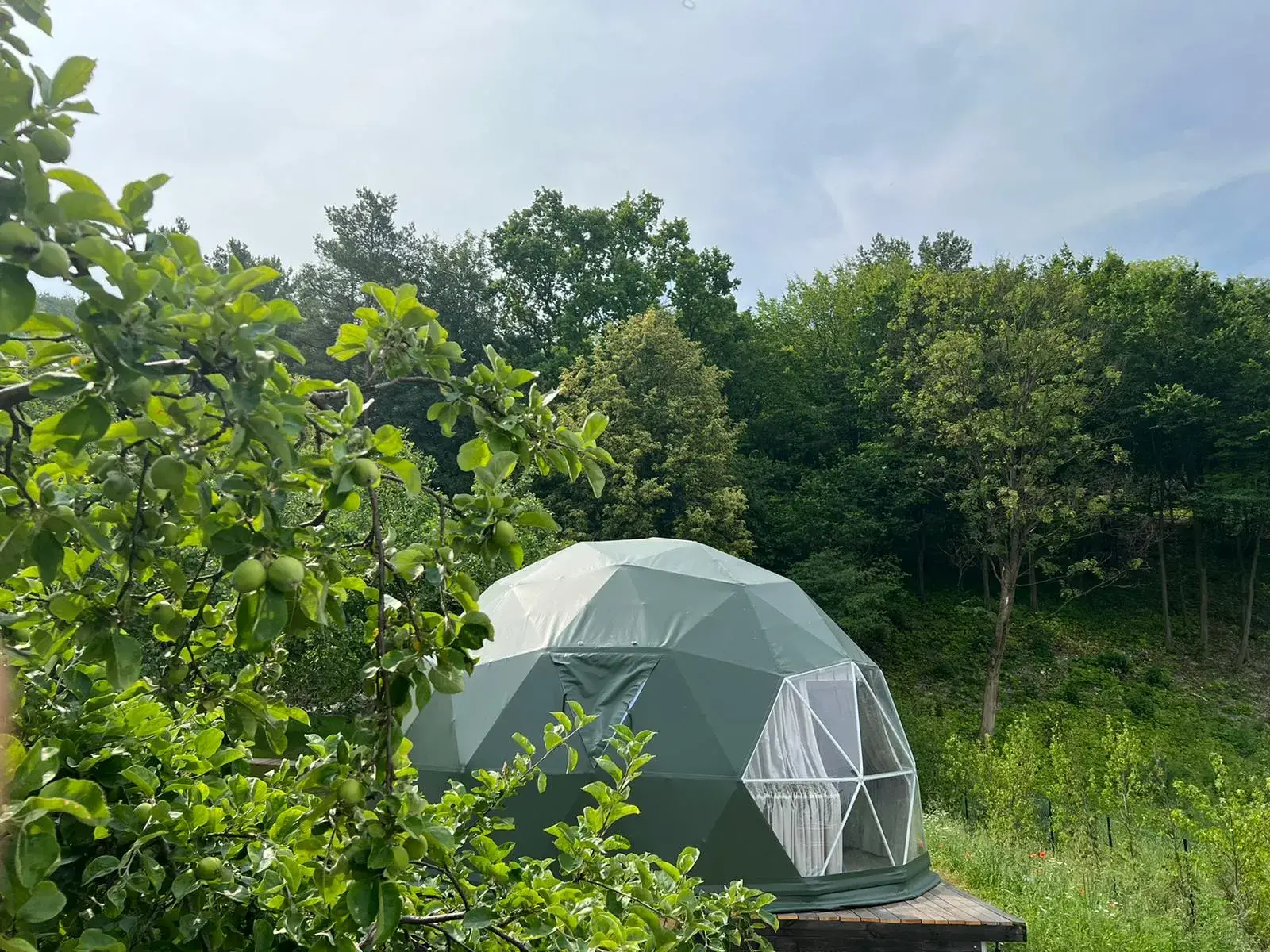
Shelter Dome’s dome home is one of the most popular choices for long-term tent living. It uses a geodesic dome design, which not only looks modern and unique, but also breaks away from the traditional idea of living spaces.
If you’ve learned some geometry, you may know that among simple shapes, a triangle is the only one that keeps its shape under pressure. When you look at this dome from the outside, you can see it’s built with a network of triangles, which makes the whole structure very strong and stable. It is built with fully waterproof, heavy-duty 850 gsm or 950 gsm PVC fabric and a Q235 steel frame. This strong combination of materials helps the structure resist high wind and snow and can be used for a long time.
A popular size is a 6-8 meter diameter (about 19.7-26.2 feet), which gives you around 28.3-50.3 square meters of space (about 304.6-541.4 square feet). Furthermore, this tent’s features a high-arched, pillarless design, resulting in a more even height distribution and maximum space utilization, offering a cozy, comfortable living environment.
A dome can include an insulation layer to improve thermal control. With low thermal conductivity (0.035 W/m·K) and up to 85% heat reflection, it helps reduce heat transfer and block radiant heat from outside. This keeps indoor temperatures more stable and lowers heating and cooling demand, reducing energy use by up to 70% in ideal conditions.
Designed with stability and comfort in mind, the dome home provides ample space, excellent ventilation, and full protection from the elements. Its smart interior design also helps save energy. Whether you’re living off the grid in an eco-friendly way or using it as a glamping option, this is a great choice for full-time living.
Pros:
- Novel and appealing residential tent structure
- Extremely durable and weather-resistant for long-term tent living
- Spacious and cozy interior
- It helps you live in tents in a more eco-friendly way
Cons:
- Slightly heavier than some other options
- There are many parts, and installation may need to take a little time
- It usually costs a bit more than a common livable tent
#2 Luxury Bell Tent - Life inTents Stella™

If you've ever seen the Stella™ Bell Tent from Life inTents, it's hard to forget. Unlike many traditional bell tents that look almost the same, the Stella™ stands out with its unique skylight and high-quality materials. It is a great choice for people who want both classic style and luxury comfort.
The Stella™ comes in sizes from 13 ft (4 m) to 19 ft (6 m) in diameter, with a peak height of 8 ft 3 in (2.5 m) to 11 ft (3.3 m). The center of the tent offers plenty of room to stand and move around. However, like most bell tents, it has low sidewalls that measure only 23.5 in (0.6 m) to 31 in (0.8 m) high. This means the space around the edges is less useful, making the tent most comfortable for one or two people who want a cozy and immersive camping experience.
The Stella™ is made from 11.5 oz (390 gsm) heavy-duty cotton canvas. The fabric is water-resistant, mold-resistant, UV-resistant, and fire-retardant. Its thick canvas helps the tent stand up well to regular outdoor use and changing weather.
For added comfort, the tent includes a removable 16-oz PVC floor. The sidewalls can be fully rolled up to create 360-degree airflow while keeping insects out with mesh screens. This helps reduce moisture and keeps the inside cool and comfortable. If you want more privacy, you can simply open the four mesh windows instead of the entire sidewall.
One of the Stella™ tent's most unique features is its 4 mm clear PVC skylight. The skylight includes curtains, giving you a beautiful view of the sky while also helping block UV rays and control light when needed. For people who enjoy being close to nature, it creates a luxury, bright, comfortable space that is perfect for relaxing during the day or watching the stars at night.
Pros:
- Beautiful vintage-inspired design
- Unique clear skylight for stargazing
- Easy to set up, take down, and move
- Excellent ventilation with flexible airflow options
Cons:
- Limited usable space due to the center pole and low sidewalls
- Less durable in harsh weather
- Canvas needs re-treatment over time
#3 Permanent Tent Homes - Sweetwater Bungalow House

Sweetwater Bungalows house kits are some of the closest tent-style structures you’ll find to a real house. For people who like a warm, natural living feel, they can be a great option for long-term use.
These bungalows use a vertical wall design, with three size options: 10×12 ft (3.05 × 3.66 m), 12×14 ft (3.66 × 4.27 m), and 14×20 ft (4.27 × 6.10 m). Wall height ranges from 5 to 7 ft (1.52 to 2.13 m), and peak height is about 9 to 11 ft (2.74 to 3.35 m). This creates a more box-like space that feels open and easy to use, especially for placing furniture.
Unlike many factory-made tent systems, Sweetwater Bungalows use hand-built wood frames made from high-quality lumber. Most of the wood is kiln-dried spruce, which is straight, clean-looking, and easy to work with. The kiln-drying process helps remove moisture from the wood, which reduces warping, cracking, and mold problems. It also helps protect against insects. With proper care, the wood structure can last up to 18 years.
For the covering system, Sweetwater Bungalows include a fabric shell and a rain fly. This setup is designed for people who want both comfort and durability in a wood-frame tent.
The fabric shell and rain fly are made from 18 oz (620 gsm) matte vinyl, which is waterproof, fire-resistant, mold-resistant, and UV-resistant. Inside, the shell ceiling uses 16 oz (560 gsm) 100% cotton duck canvas, which is also treated for water, mold, and fire resistance. This combination gives a more natural and comfortable indoor feel. With proper use and care, the rain fly can last up to 12 years.
The kit is also flexible. In addition to the main structure, customers can customize many parts. Excluding the doors, windows, and frame system, other components can be adjusted based on DIY needs. You can also choose different colors for the fabric shell and canvas and upgrade options like extended rainflies or different window styles.
Overall, Sweetwater Bungalows are a good fit for people who want a handcrafted, natural living tent space and are open to longer stays. They are also great for DIY users who have some building experience or access to construction materials.
Pros:
- Feels more like a real home
- Good for long-term use
- High-quality handmade wood frame
Cons:
- More complex setup
- Not beginner-friendly
- Less portable
#4 Portable Bell Tent - White Duck Outdoors Regatta

White Duck Outdoors Regatta bell tent is a good choice for people who want a flexible living space with a classic, vintage tent look. It works well for outdoor lovers and people who enjoy short-term or seasonal camping.
The tent uses a galvanized steel pole frame, which makes the structure stronger and more durable. The outer shell is made of 8.5 oz DYNADUCK canvas with a PFC-free coating that is waterproof, mold-resistant, and UV-resistant. This helps the tent handle regular outdoor use while keeping a natural cotton feel. It also comes with a grounding and shock-absorbing setup to help keep the tent stable in different conditions.
The Regatta bell tent comes in sizes from 8 ft (2.5 m) to 20 ft (6 m) in diameter. The wall height is about 2 ft 7 in (0.79 m), and the center pole height ranges from 7 ft 5 in (2.26 m) to 11 ft 2 in (3.40 m). The space inside is open and can be used for sleeping, storage, and daily activities. The size range fits different needs, from solo campers to families.
It also offers many color options, including natural canvas, red, blue, green, and camouflage styles. This gives users more freedom to choose a look they like. In addition, it comes with a full setup kit, including tools, a sewn-in groundsheet, stove jack, and mesh windows. This makes setup easier, even for first-time users.
Overall, the White Duck Outdoors Regatta bell tent is a budget-friendly and flexible tent option that combines style and basic comfort.
Pros:
- Lightweight and easy to set up
- Many color options for personal style
- Uses PFC-free, more eco-friendly coating
- Good value for the price
Cons:
- Limited usable space due to the center pole and low sidewalls
- Better for short-term or seasonal use, not long-term living
- Requires regular care and maintenance
#5 Practical Canvas Wall Tent - Davis Tent Canvas Wall Tent

The Davis Tent Canvas Wall Tent is a solid choice for anyone looking for a durable tent for long-term camping or off-grid living. Since 1955, Davis Tent has focused on making canvas wall tents and is well known for its strong build quality and craftsmanship.
The tent comes in standard sizes from 10x10 ft (3x3 m) to 16x25 ft (4.9x7.6 m), with 5 ft (1.5 m) side walls, and larger custom sizes are also available. Even for larger groups or users with a lot of gear, it can still offer enough space for comfortable living.
One of its biggest strengths is its high level of customization. Buyers can choose different canvas treatments based on climate and location, along with a wide range of tent accessories, setup systems, and sizes. You can also add useful options like doors, windows, stove jacks, awnings, and liners to build a shelter that fits your exact needs.
The tent uses aluminum poles and steel or aluminum stakes, giving it a good balance of strength and portability. It is made from 10.10 oz long-fiber double-fill cotton canvas treated with Sunforger®, which offers better strength, breathability, structure, and durability compared to many standard canvas materials. This also helps make the tent more comfortable for long-term use.
High-wear areas are reinforced to improve durability and extend the tent’s lifespan. With proper care, some users report that their tents can last more than 30 years.
Pros:
- Wide range of customization options
- High-quality materials and solid craftsmanship
- Suitable for many different use cases, especially long-term camping
Cons:
- Must be fully dry before storage to avoid mold or fabric damage
- Takes longer to set up compared to most standard tents
- Higher upfront cost than many other camping tents
#6 Advanced Cabin Tent - Glitzcamp Safari Cabin Tent

If you already have a stable place for long-term outdoor living and want a warmer, more home-like tent experience, the Glitzcamp Safari Cabin Tent is a good option to consider. It is quite different from a traditional canvas cabin tent. From the outside, it looks more like a real cabin structure rather than a standard camping tent.
In terms of covering, it uses an upgraded double-layer system. The outer layer is made of 650gsm or 750gsm PVC, which is waterproof, UV-resistant, moisture-proof, mold-resistant, and tear-resistant. It is built to handle tough outdoor conditions. The inner layer uses 370gsm thick canvas, which helps improve insulation and moisture control, making the overall living space more comfortable and durable.
The frame is built with strong Q235B steel and treated with an anti-rust coating, making it suitable for long-term fixed installation. The roof extends at least 0.5m (1.64ft) outward, which helps protect against rain and strong sunlight. Overall, the structure is more stable than a typical cabin tent and performs better in harsh weather.
For space, Glitzcamp offers two size options: about 16㎡ (172 sq ft) and 40㎡ (431 sq ft). The interior is open and spacious, with no extra support poles inside, so you can make full use of the living space. The walls come with multiple large waterproof windows that can be opened or closed easily, helping with airflow while still keeping out wind and rain.
This tent also comes with a wide range of optional add-on systems. If needed, Glitzcamp can provide full solutions including power systems, lighting, air conditioning, basic appliances, and even premium solid wood flooring. These upgrades can turn the tent into a more modern living space, offering a comfortable and convenient tent lifestyle.
Overall, whether for long-term off-grid living or as a fixed family vacation cabin, the Safari Cabin Tent offers a well-built, comfortable, and fully functional living solution.
Pros
- Strong structure with durable, weather-resistant materials
- Spacious interior with flexible layout options
- Available with full luxury living system upgrades
Cons
- Heavy structure and longer setup time, not easy to move or take down
- Higher price compared to standard heavy duty tents
Tips for Full-Time Tent Living
It requires some preparation to ensure comfort and sustainability to live in tents. Here are a few tips to help you adjust:
- Choose the Right Location: Ensure that your tent is pitched in a safe, dry location away from potential hazards like floods or high winds.
- Invest in Insulation: Insulating your tent will help maintain comfortable temperatures in both cold and hot climates.
- Keep Your Tent Well-Maintained: Regularly check for wear and tear, clean the tent, and make sure all seals and zippers are in working condition.
- Bring Essential Gear: Equip your tent with necessary appliances like solar lights, portable heaters, or fans for comfort.
Conclusion
Living in a tent full-time offers an exciting and adventurous lifestyle, but it requires the right preparation and the right tents you can live in. Whether you're looking for luxury or practicality, the top 6 house tents to live in we've highlighted are designed for comfort, durability, and year-round living. If you’re ready to start your journey into full-time tent living, contact Shelter Dome for high-quality, weather-resistant dome tents and other quality livable tents that will make your off-grid living experience comfortable and sustainable.
FAQs
Is It Cheap to Live in a Tent?
Yes, compared to traditional housing, tent living has clear advantages when it comes to cost. It’s cheaper to build or buy, uses less energy, and in some areas, you don’t even have to pay property taxes. So, it’s a great option for people who want a more affordable way to live.
Can You Legally Live in a Tent?
In general, living in a tent is legal as long as you follow the local laws and rules. Whether it's allowed mostly depends on where you are. It's usually more restricted to live in a tent on public land, while living on private land with a tent is often easier, as long as you meet the basic requirements.
What Are the Disadvantages of Living in a Tent?
One of the biggest downsides of tent living is that it’s not as convenient as a regular house. Most tents you can live in only provide basic shelter, so you’ll need to add your own furniture and daily living items. However, many tent suppliers now offer solutions for this. Some of them sell furniture and modular living setups that are made to fit their tents, making life inside much easier.
Can You Live in a Tent in Your Backyard?
It depends on local rules and HOA regulations. Even if it’s not clearly banned, a backyard tent can still cause issues if it creates noise, cleanliness problems, or bothers neighbors, which may lead to complaints or restrictions. If it’s allowed, keep noise down, stay clean, and be considerate of neighbors to avoid problems.
Can You Live in a Tent on Your Own Land?
It depends on your local laws and the type of land. Rules vary by country and area. For example, the UK's 28-day rule allows some temporary land use but does not automatically allow long-term tent living. Before living in a tent on your land, check with your local government to make sure it's allowed.
Can You Live in a Tent at a Campground?
It depends on the campground. Some campgrounds allow long-term tent camping, while others have limits on how long you can stay. Always check the campground's rules before moving in.
Can You Live in a Tent Full Time?
Yes, but it depends on where you are and your living setup. Some people do live in tents full-time, but it usually requires a legal place to stay, a tent that is built for long-term use, a suitable climate, and access to basic needs like water, power, and sanitation facilities.
Can You Live in a Tent in the Winter?
Yes, but you need to be prepared and use a tent that works well in cold weather. Besides choosing the right tent, it’s important to set it up in a place that is protected from strong wind. You also need to balance warmth and airflow inside the tent to stay warm and avoid moisture problems. In very cold conditions, a safe heating system can also help improve comfort.
